

Book Online
Please choose which location you would like to make an appointment for.
Does print look uncomfortable, shimmer or seem to move when you read? A full eye examination is the first step in finding out why. Colorimetry, also called colourimetry, explores whether changing the colour of light makes text feel more comfortable. Some people report relief with coloured filters, but research has not established reliable benefits for reading difficulties.1,2
Innovative Eye Care has a colorimeter at our Adelaide practice. We can assess your symptoms and discuss whether further testing is appropriate. Tinted lenses are not a proven treatment for dyslexia, and a colour preference alone does not establish that you need them.3

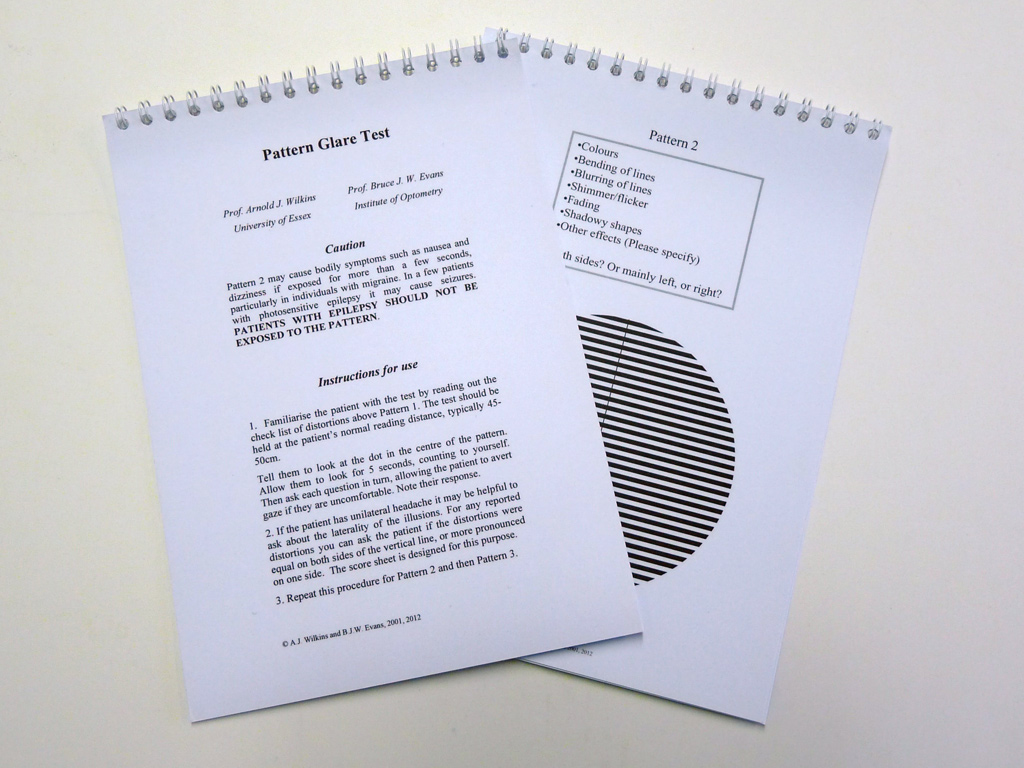
Visual stress describes discomfort or visual distortions when looking at text or repetitive patterns. Pattern glare refers to symptoms triggered by striped or similar high-contrast patterns. These terms describe an experience, but they do not identify a single cause. The proposed mechanisms and diagnostic criteria remain debated.3,4
You may also hear the terms Meares-Irlen syndrome or Irlen syndrome. These labels do not mean that dyslexia or another learning condition has been diagnosed.3
Symptoms reported with visual stress include eye strain, headaches during reading, and text that seems to shimmer, blur or move. Dense print or repeated patterns may feel uncomfortable to look at.4
Tell your optometrist when the symptoms start, how long they last and which tasks bring them on. Mention whether they occur with books, screens or both. These details help guide the examination. Similar symptoms can occur with prescription, focusing or eye coordination problems, so they should not automatically be attributed to visual stress.1,3
We begin by assessing your vision and eye health. We may check your glasses prescription, near focusing and how your eyes work together. Depending on the findings, the next step may be glasses, management of a specific visual problem, further investigation or referral. Treating an eye problem may improve visual comfort, but it does not treat an underlying learning difficulty.1
For a child who avoids reading, loses their place or complains of tired eyes, arrange a children’s eye test. Our vision and learning page explains the broader assessment of schoolwork concerns. A prescription problem such as long-sightedness may need attention before considering coloured filters.
If we identify a specific eye coordination or focusing problem, we can discuss the relevant options. Our vision therapy page explains this separate service. Colorimetry assesses responses to colour and does not involve an eye exercise program.
A colorimeter presents text under different coloured lighting conditions. You compare settings and describe whether the print feels easier or harder to look at. This is a largely subjective process, meaning it relies on your description of what you see and how comfortable it feels. Colour preferences and reported responses vary between individuals. There is no single colour that works for everyone.5
A colour that feels helpful during testing may not provide the same benefit during everyday reading. Some people report greater comfort, while others notice little or no benefit. A preferred colour does not prove a neurological diagnosis or guarantee that tinted spectacles will help. Any perceived benefit needs to be considered alongside your symptoms and eye examination findings.3,5
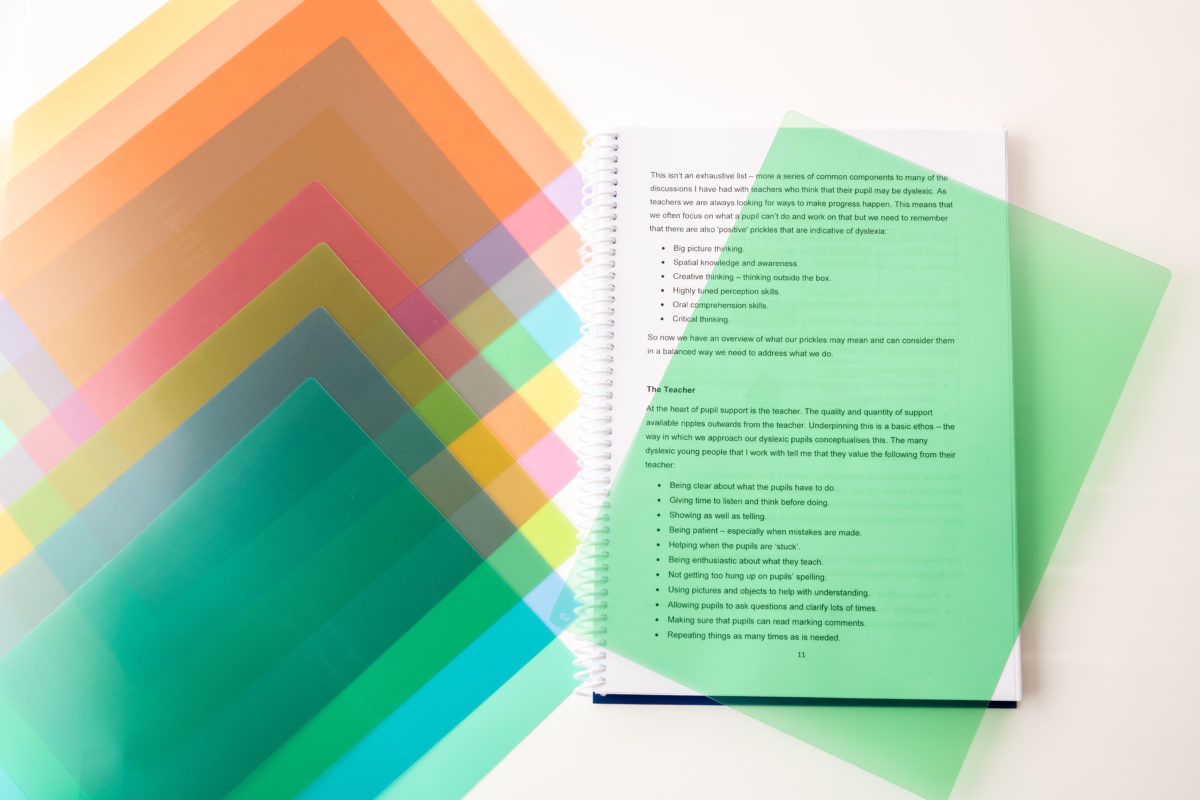
A coloured overlay is a transparent sheet placed over printed material. Tinted spectacle lenses place a filter in front of the eyes. They are different ways to change the appearance of text, and liking an overlay does not establish that a particular spectacle tint will give lasting benefit.3,5
Bring your current glasses and any overlays or tinted lenses you already use. Bring examples of reading material that causes difficulty. Tell us about previous assessments and what has or has not helped. Contact the practice before booking to confirm the appointment type and location.
Some studies have reported benefits from coloured overlays and tinted lenses in people with visual stress. One systematic review found improvements in reading performance in selected people with these symptoms. In a small randomised trial, participants also reported less discomfort and visual distortion, and their measured reading speed was faster with colour than without it.4,5
The symptoms being assessed, such as eye strain, discomfort and text appearing to move, are often subjective. Improvements in these symptoms also rely largely on how each person describes their experience. Colour preferences and the amount of relief reported vary between individuals. A colour that feels helpful to one person may offer little benefit to another, so assessment needs to consider your own symptoms and everyday reading tasks.4,5
Positive findings need to be considered alongside the limits of the research. Reviews have reached different conclusions, and the small trial found no extra benefit from a precisely selected tint compared with a similar comparison tint. Benefits are therefore not predictable or guaranteed. Discuss the cost, alternatives and a review plan with your optometrist, and judge any perceived improvement during your usual reading activities over time.1,2,5
Colorimetry does not diagnose dyslexia. Coloured overlays and tinted spectacles do not address its underlying language and reading difficulties. Eye care can identify a coexisting vision problem, while assessment and reading support address the learning concern.1,4
If your child struggles to learn to read, discuss this with their teacher and seek appropriate learning assessment and evidence-based reading instruction. An eye appointment or colour assessment should not delay this support.3
If you or your child experiences discomfort when reading, contact our team to arrange an eye examination and ask about colorimetry. Tell us about your symptoms so we can guide you to the appropriate appointment.
Our colorimeter is at the Adelaide practice, 300 Wakefield Street. Call (08) 8231 9341. For general eye care enquiries at Henley Beach, call (08) 8445 9050. Confirm the location when booking a colorimetry assessment.
Book your appointment now for personalised eye care tailored just for you.