

Book Online
Please choose which location you would like to make an appointment for.
Clear, comfortable vision plays an important role in how children learn.
Reading from a book, copying from the board, using a screen, writing, tracking along a page and maintaining concentration all place demand on the visual system. A child may be able to see clearly on a basic letter chart and still have difficulty using their eyes comfortably for schoolwork.
At Innovative Eye Care, we provide children’s eye tests in Adelaide and Henley Beach. We assess more than eyesight. We look at how clearly your child sees, how well their eyes work together, how accurately they focus, and how comfortably they use their vision for learning.
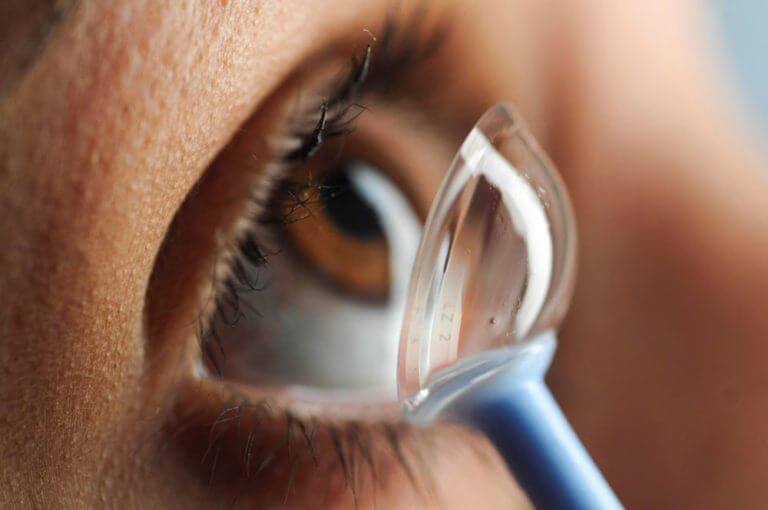
Vision and learning refers to the way a child uses their visual system in the classroom.
Good vision is more than seeing small letters across the room. Children also need to:
Research has shown an association between vision problems and academic performance in school-aged children.1,2 This does not mean every learning difficulty is caused by the eyes. It means vision should be checked when a child struggles with reading, writing, attention, copying, or near work.
Children often assume everyone sees the same way they do. They may not complain about blur, double vision or eye strain.
Some children adapt by avoiding reading, guessing words, losing concentration, sitting close to the board, or relying on memory rather than clear vision. These behaviours can look like poor attention, low motivation, or difficulty with reading.
A full children’s eye test helps separate visual issues from other learning factors. It can also identify when a child needs glasses, myopia management, binocular vision care, or referral for further assessment.
Consider an eye test if your child:
These signs are common reasons for a children’s vision assessment. They do not confirm a diagnosis on their own.
Book a children’s eye test
How Vision Can Affect Reading and Schoolwork
The eyes need to aim accurately at the same word, focus clearly at near, move smoothly across the page, and maintain comfortable single vision. If one part of this system is under strain, reading can become slower and more tiring.
Studies have found that some children with academic or reading difficulties have higher rates of visual deficits than children without these difficulties.1 Other research has found that vision status can relate to academic achievement in younger school children.2
Uncorrected long-sightedness can also affect early literacy. The Vision in Preschoolers Hyperopia in Preschoolers Study found that 4 and 5 year old children with uncorrected moderate hyperopia performed worse on a test of early literacy than children without significant refractive error.3
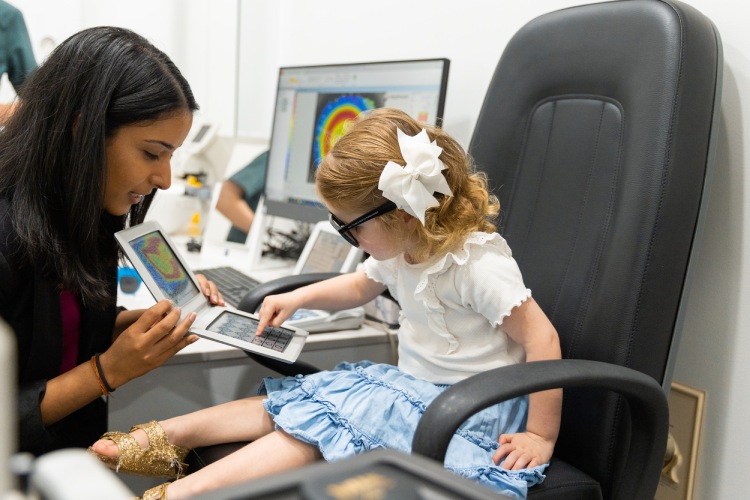
At Innovative Eye Care, a children’s eye test may include assessment of:
We check how clearly your child can see the board, signs, faces, and other distance targets.
We assess how clearly your child sees books, worksheets, screens and close tasks.
We check for short-sightedness, long-sightedness and astigmatism. These can affect clarity, comfort and visual development.
Focusing allows the eyes to keep print clear at near and change focus between the board and desk. Focusing problems can cause blur, fatigue or avoidance of close work.
Eye teaming, also called binocular vision, is the ability to use both eyes together as one system. Poor eye teaming can cause double vision, headaches, eye strain, or loss of place when reading.
Convergence is the ability to turn the eyes inward for near work. Convergence insufficiency can cause symptoms during reading and close tasks. Randomised clinical trials have shown that office-based vergence and accommodative therapy can improve clinical signs and symptoms of convergence insufficiency in children.4,5
Eye movements help a child move accurately across a line of text and shift gaze between the board, book and teacher.
We assess the health of the front and back of the eye. This helps rule out eye disease or structural problems that may affect vision.
We may assess stereopsis, fusion, visual comfort and how your child uses both eyes together.
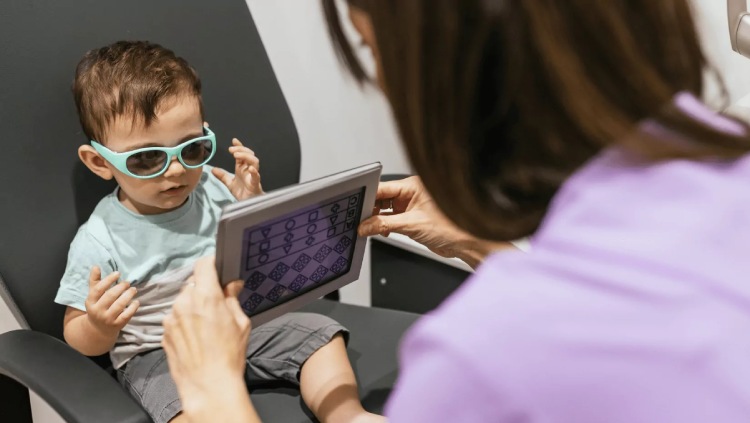
A school vision screening can help identify children who may need a full eye examination.
Screenings are useful because they can detect vision concerns early and encourage families to seek care. Research supports the role of school-based vision programs in identifying children with refractive error, amblyopia risk factors, strabismus and other ocular concerns.6,7
A screening is not the same as a full eye test.
A comprehensive children’s eye test allows more detailed assessment of prescription, binocular vision, focusing, eye movements, symptoms, ocular health and treatment options.
At Innovative Eye Care, we recommend a full eye examination if a child fails a screening, has symptoms, is struggling at school, has a family history of eye problems, or has never had their eyes tested.
Learn more about Children’s Vision
Innovative Eye Care also provides school vision screenings.
Our screening process can assess key visual skills used in the classroom, including distance and near vision, focusing ability, eye alignment, convergence, tracking and binocular vision skills.
We usually recommend screening in Reception to Year 1 to help detect concerns early, although screenings can be adapted for other year levels.
For school screenings, we bring the required testing equipment. We require a quiet, well-lit room with enough space for distance vision testing, access to power, and tables and chairs for staff and students.
To discuss school vision screening, contact Innovative Eye Care.
Short-sightedness, long-sightedness and astigmatism can cause blurred vision, headaches, squinting or avoidance of visual tasks.
Myopia, or short-sightedness, often begins in childhood and can progress as the eyes grow. A child with myopia may struggle to see the board or distant objects clearly. Learn more about Myopia and Myopia Control.
Hyperopia, or long-sightedness, can make close work more demanding, especially when uncorrected. Some children can compensate by focusing harder, but this may cause fatigue or reduced attention during near work. Learn more about Hyperopia.
Astigmatism can blur or distort vision at distance and near. It can affect reading comfort and clarity. Learn more about Astigmatism.
This occurs when the eyes struggle to turn inward comfortably for near work. Symptoms can include headaches, double vision, eye strain, losing place, or avoiding reading.
Amblyopia, often called lazy eye, occurs when one eye does not develop normal vision during childhood. Early detection improves the chance of successful treatment. Learn more about Amblyopia.
Strabismus occurs when one eye turns in, out, up or down. It can affect depth perception, binocular vision and visual comfort.
Children should have their eyes tested before starting school, or earlier if there are concerns.
A child should also have an eye test if they:
Some children need more frequent reviews, especially if they have myopia, amblyopia, binocular vision problems, or a history of eye disease.
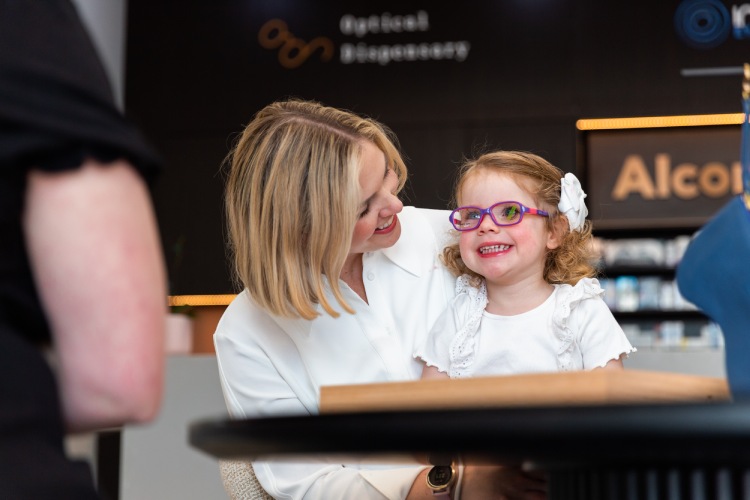
After your child’s assessment, we explain the results clearly.
Depending on the findings, we may recommend:
Our goal is to help your child see clearly and use their vision comfortably at school and at home.
If your child is struggling with reading, concentration, copying from the board, headaches, or visual comfort, a children’s eye test is a practical first step.
Innovative Eye Care provides children’s vision assessments in Adelaide and Henley Beach.
Book your appointment now for personalised eye care tailored just for you.