

Book Online
Please choose which location you would like to make an appointment for.
Clear vision helps children learn, read, play sport and feel confident at school.
Children do not always know when their vision is blurry. They may think everyone sees the same way they do. Some children pass a basic vision screening but still have focusing, eye teaming, tracking or eye health problems that need a full eye test.
At Innovative Eye Care, we provide children’s eye tests in Adelaide and Henley Beach. Our optometrists assess more than eyesight. We check how your child’s eyes focus, work together, move across a page and stay healthy.
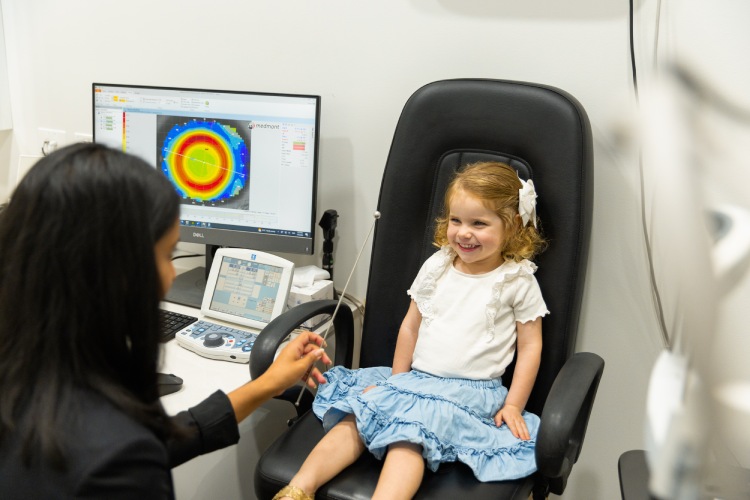
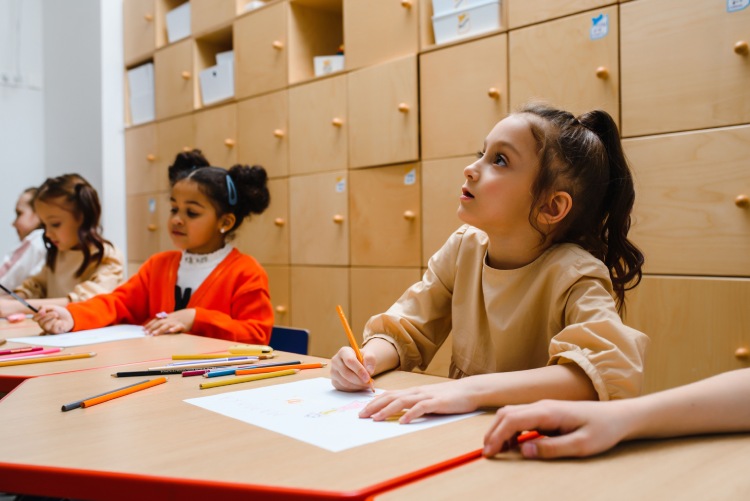
A child’s vision is still developing during the early years of life. Some vision problems, such as amblyopia, strabismus and significant refractive errors, are easier to manage when detected early.1
Amblyopia, often called lazy eye, is when one eye does not develop clear vision as well as the other eye. This can happen even when the eye looks healthy. It is often caused by one eye needing a much stronger prescription than the other, or by an eye turn. Australian studies have found that amblyopia affects around 1.9% of preschool children and is commonly linked with prescription differences between the eyes, eye turns, or both.2,3
Children can also develop myopia, or short-sightedness. Myopia often begins in childhood and can progress as the eye grows. Global estimates suggest myopia is becoming more common, with nearly half of the world’s population projected to be myopic by 2050.4
A full children’s eye test helps identify whether your child needs glasses, myopia management, vision support, eye health treatment, or further testing.
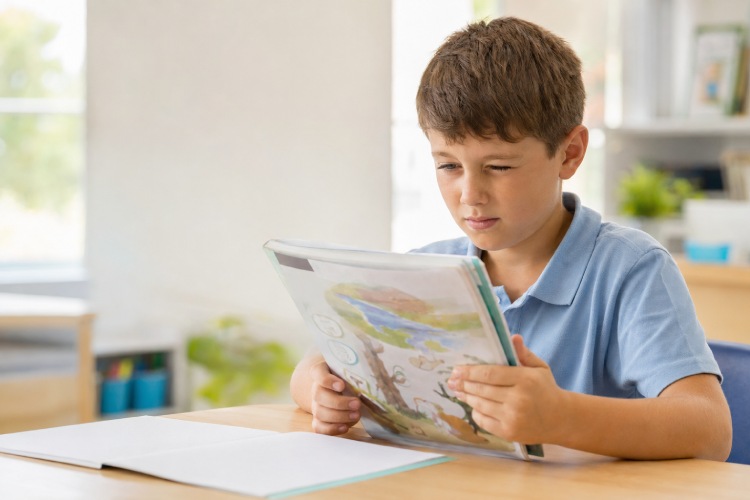
Your child may need an eye test if you notice:
A child can still have a vision problem without obvious symptoms. For this reason, regular eye tests are useful, especially before school, during primary school and during periods of rapid growth.
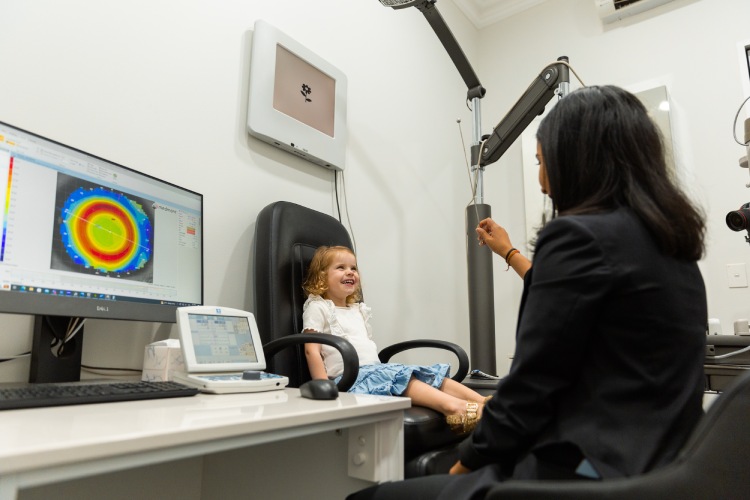
Children can have an eye test at any age.
We recommend an eye test if there are concerns about your child’s vision, learning, eye alignment, reading comfort, headaches, or family history of eye conditions.
A children’s eye test is also helpful before starting school, even if your child seems to see well. Vision screening can detect some problems, but it does not replace a full eye examination. A comprehensive eye test can assess prescription, eye health, binocular vision, focusing and visual function in more detail.1
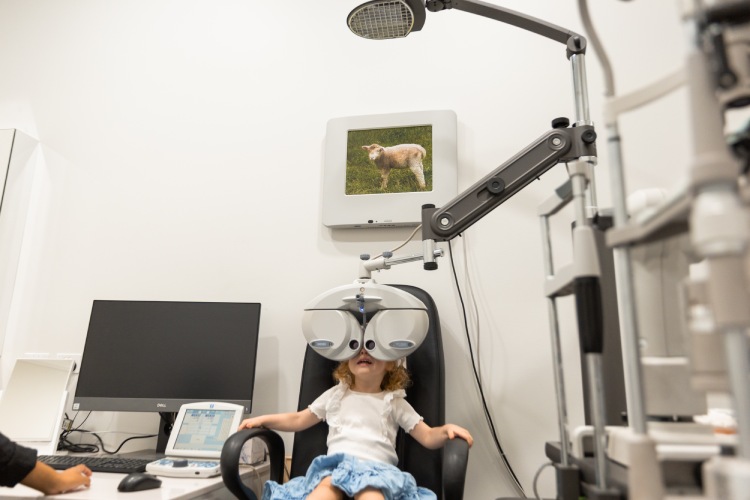
We adapt the test to your child’s age, attention and confidence.
A children’s eye test may include:
Vision testing
We check how clearly each eye sees. For younger children, we can use matching, pictures, letters or age-appropriate charts.
Prescription check
We assess whether your child is long-sighted, short-sighted or has astigmatism. We also look for differences between the eyes, as this can affect visual development.
Eye teaming
We check how well the eyes work together. Eye teaming problems can cause blur, double vision, headaches, tired eyes, or trouble keeping place when reading.
Focusing assessment
We assess how well your child can focus up close and shift focus between near and far tasks. This is important for reading, writing, devices and classroom learning.
Eye movement testing
We assess how the eyes move across a page and follow targets. This can be relevant when a child loses place, skips words, or finds reading tiring.
Eye alignment
We check whether the eyes are straight and balanced. Eye turns can be constant or intermittent. Some are easy to notice, while others are subtle.
Eye health check
We examine the front and back of the eyes. This helps detect eye disease, inflammation, retinal changes, congenital issues and other conditions that may affect vision.
Myopia risk assessment
If your child is short-sighted, or at risk of becoming short-sighted, we can assess myopia progression risk. We may discuss glasses, myopia control lenses, Ortho-K, contact lenses, atropine, outdoor time and follow-up testing.
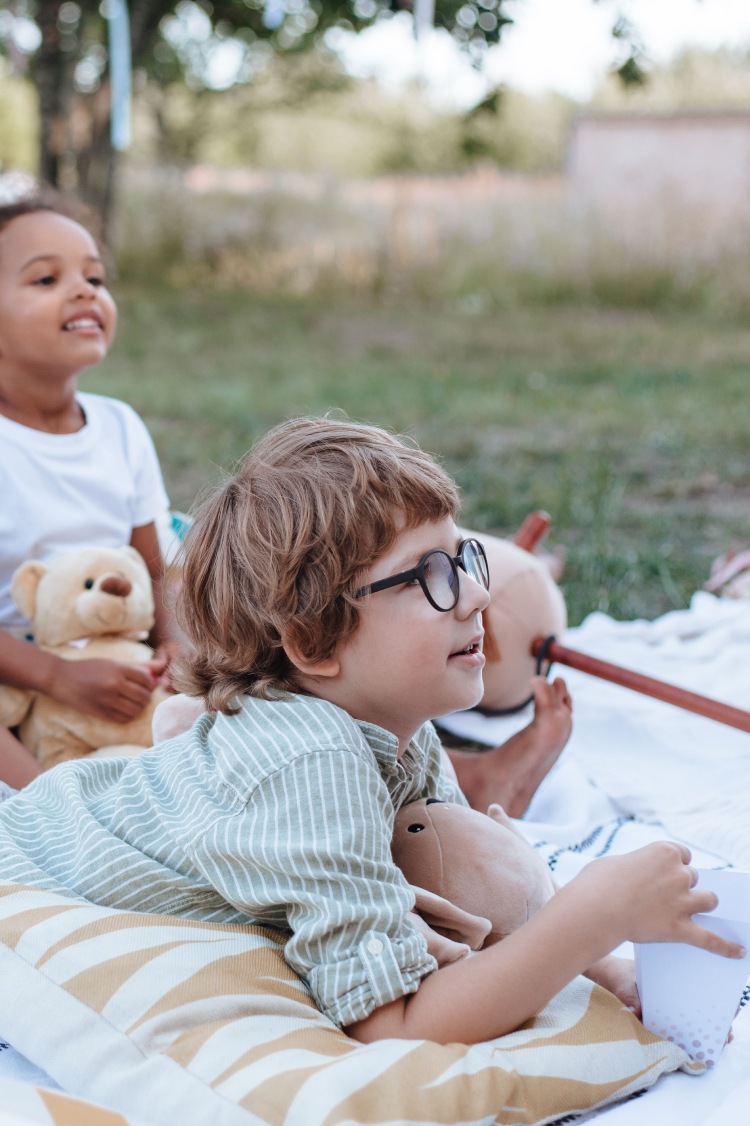
Not every child who has an eye test needs glasses.
Glasses may help if your child has short-sightedness, long-sightedness, astigmatism, eye strain, amblyopia risk, or a large difference in prescription between the eyes.
Some children need glasses full-time. Others only need them for reading, schoolwork, screens, or distance tasks. We will explain what we find and give clear advice on when glasses should be worn.
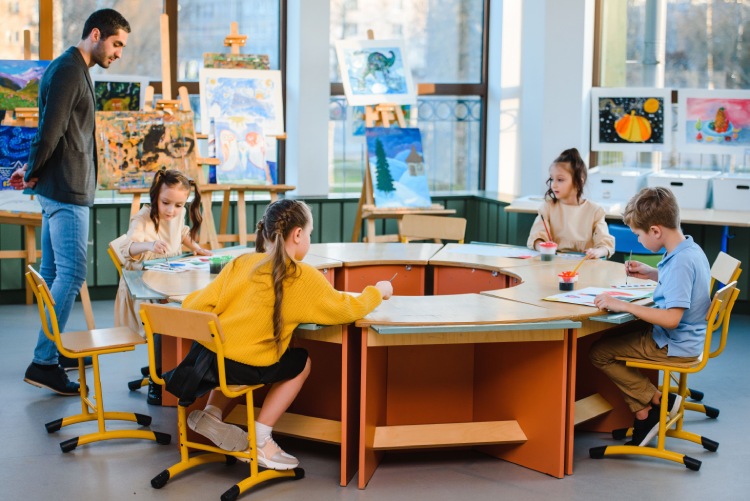
Vision is only one part of learning, but it can affect how comfortably a child reads, writes and works in the classroom.
Uncorrected refractive error can affect a child’s ability to see the board, read clearly and maintain attention during visual tasks. A large school-based clinical trial found that providing eye examinations and glasses through a school vision program improved academic outcomes in children who needed vision correction.5
An eye test does not diagnose learning disorders. It can identify whether vision is adding extra load to schoolwork. If we find concerns with focusing, eye teaming, tracking, visual comfort, or clarity, we can guide the next step.
Myopia causes blurred distance vision. Children with myopia may struggle to see the board, road signs, sports action or faces across a room.
Myopia is more than a glasses prescription. Progressive myopia usually means the eye is growing longer. Higher levels of myopia increase the lifetime risk of eye disease, including retinal detachment, myopic maculopathy and glaucoma.4
Outdoor time appears protective against developing myopia, while near work and screen habits may contribute to risk in some children.6,7
At Innovative Eye Care, we assess myopia risk and progression.
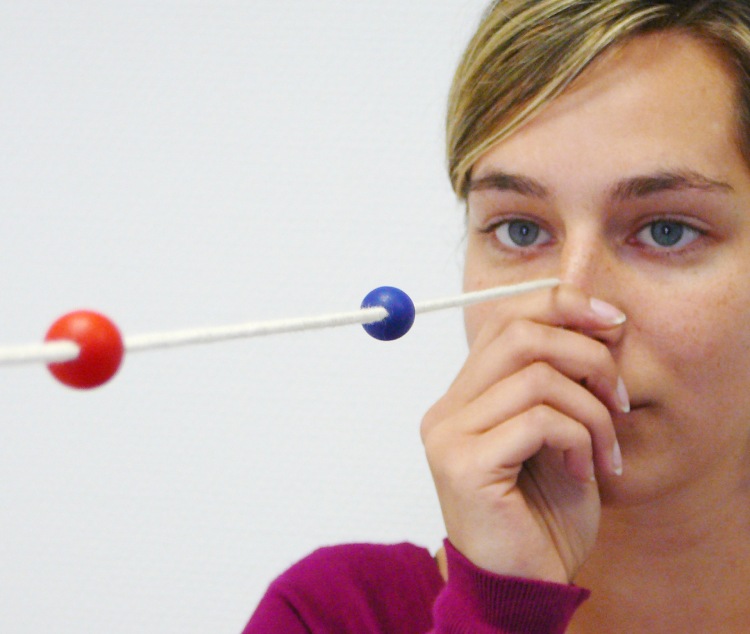
Some children have clear eyesight but still struggle with how their eyes work together.
This can include focusing problems, eye teaming issues, convergence difficulties, or tracking concerns. These problems may cause headaches, blur, double vision, tired eyes, avoidance of reading, or difficulty sustaining close work.
If your child shows signs of a binocular vision problem, we can assess whether glasses, visual advice, targeted activities, referral, or vision therapy may help.
Innovative Eye Care provides children’s eye tests at our Adelaide and Henley Beach practices.
We take time to understand your child’s symptoms, school demands, hobbies, family history and previous eye care. We explain results in clear language and provide practical recommendations.
Your child’s appointment may include:
Book an appointment sooner if your child has:
If symptoms are sudden, painful, or one-sided, prompt assessment is important.
A children’s eye test can help explain blurry vision, reading discomfort, eye strain, headaches, eye turns and myopia progression.
Book an appointment with Innovative Eye Care in Adelaide or Henley Beach.
Book your appointment now for personalised eye care tailored just for you.