Myopia Prevention and Management in Adelaide

Myopia, also called short-sightedness, causes blurred distance vision. In children, it can worsen as the eye grows longer than expected.

At Innovative Eye Care, we provide evidence-based myopia prevention, control and management in Adelaide and Henley Beach. Our goal is to help your child see clearly now, while also reducing the risk of their myopia becoming worse over time.

Myopia management is more than updating glasses. It involves understanding your child’s risk, measuring eye growth, choosing the right treatment and reviewing progress over time.
Book a Myopia Management Assessment
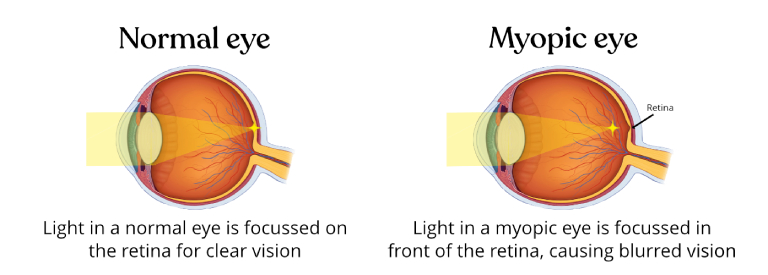
Diagram comparing light focus in a normal eye and a myopic eye

What is Myopia?

Myopia occurs when light focuses in front of the retina instead of directly on it. This can happen when the eye grows too long, or when the eye’s focusing power is too strong. The result is clearer near vision and blurred distance vision.

‍

When myopia is linked to eye growth, it needs careful monitoring. As the eye lengthens, the tissues at the back of the eye stretch. This can increase the risk of serious eye disease later in life.

What is Myopia Management?

Myopia management is a structured plan to slow the progression of short-sightedness.

It may include:

  • Lifestyle advice
  • Regular children’s eye tests
  • Axial length measurement to track eye growth
  • Myopia control spectacle lenses
  • Orthokeratology, also called Ortho-K or night lenses
  • Soft myopia control contact lenses
  • Low-dose atropine eye drops when appropriate
  • Ongoing reviews to check treatment effect and eye health

The right plan depends on your child’s age, prescription, eye shape, lifestyle, family history and how quickly their eyes are changing.
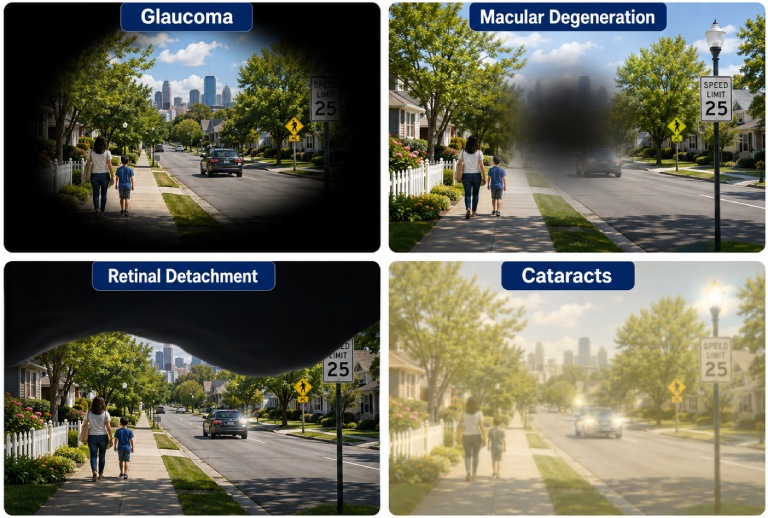
Simulations showing how glaucoma, macular degeneration, retinal detachment and cataracts may affect vision

Why Myopia Management Matters

Myopia is common, and it is becoming more common in children worldwide. Research suggests that almost half of the global population may be myopic by 2050.1

‍

For many children, myopia starts as a practical problem. They may struggle to see the board at school, read road signs, play sport clearly, or recognise faces across a room.

‍

The bigger concern is long-term eye health. Higher levels of myopia increase the lifetime risk of eye conditions such as myopic macular degeneration, retinal detachment, glaucoma and cataract.2

‍

This does not mean every child with myopia will develop eye disease. It means we should take progressive myopia seriously and aim to slow it where possible.

‍

Can Myopia Be Prevented?

Not all myopia can be prevented. Family history, age, ethnicity, near work, screen habits and outdoor time can all influence risk.

Outdoor time has the strongest lifestyle evidence. Children who spend more time outdoors have a lower risk of developing myopia, and school-based trials have shown that increasing outdoor time can reduce new cases of myopia.3,4

Outdoor time is most helpful before myopia starts. Once a child is already myopic and their prescription is progressing, they may also need active myopia control treatment.

Practical prevention advice includes:

  • Encourage regular outdoor time each day
  • Take breaks during long periods of reading or screen use
  • Avoid holding books or screens too close
  • Keep a comfortable working distance for near tasks
  • Book regular eye tests if one or both parents are myopia
  • Arrange an eye test if your child squints, moves closer to the TV, or has trouble seeing the board at school

Signs Your Child May Have Myopia

Your child may need a myopia assessment if they:

  • Have trouble seeing the board at school
  • Sit close to the TV
  • Hold books or screens close
  • Squint to see in the distance
  • Complain of headaches or tired eyes
  • Avoid sport or distance-based activities
  • Have frequent prescription changes
  • Have one or both parents with myopia

The younger myopia starts, the more time it has to progress. Early assessment helps us decide whether monitoring alone is enough, or whether treatment should start.
Our Myopia Management Process

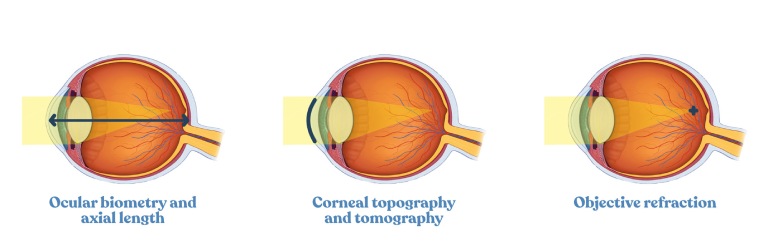
1. Comprehensive Eye Examination

We begin with a full eye examination. This checks your child’s vision, prescription, eye focusing, eye coordination and ocular health.

‍

We also ask about school, sport, screen use, reading habits, outdoor time, family history and previous prescription changes.

2. Axial Length Measurement

Axial length is the front-to-back length of the eye.

‍

In progressive myopia, the eye usually grows too long. Measuring axial length helps us track whether the eye is growing at a normal rate or whether myopia is progressing.

‍

This gives us more information than prescription alone. A child’s prescription can sometimes appear stable for a period, while eye growth still needs monitoring.

3. Corneal and Eye Shape Assessment

Some myopia control options need more detailed eye shape measurements.

‍

For Ortho-K, we use corneal topography to map the shape of the front surface of the eye. This helps us assess whether night lenses are suitable and supports accurate lens design.

4. Personalised Treatment Plan

There is no single best myopia control treatment for every child.

‍

We consider:

  • Your child’s age
  • Their prescription
  • How quickly their myopia is changing
  • Axial length and eye growth
  • Eye shape
  • Visual demands at school
  • Sport and hobbies
  • Whether they are ready for contact lenses
  • Family preferences
  • Treatment safety and compliance

5. Regular Monitoring

Myopia management is ongoing. Reviews help us check whether treatment is working and whether the plan needs to change.

‍

At these visits, we may check vision, prescription, axial length, eye health, lens fit and treatment compliance.

Myopia Management Options

Child writing with their face very close to the page

Myopia Control Spectacle Lenses

Myopia control spectacle lenses are often a good first option for children who are not ready for contact lenses.

‍

These lenses look like normal glasses, but they use special optical designs to help slow myopia progression. They correct your child’s central vision while also providing a treatment effect across other parts of the lens.

‍

Several myopia control spectacle lens designs have been shown to slow prescription change and eye growth compared with standard single vision lenses.

‍

Myopia control glasses may suit children who:
  • Need a simple treatment option
  • Are too young for contact lenses
  • Prefer glasses
  • Need full-time vision correction
  • Have a prescription suitable for these lens designs

‍

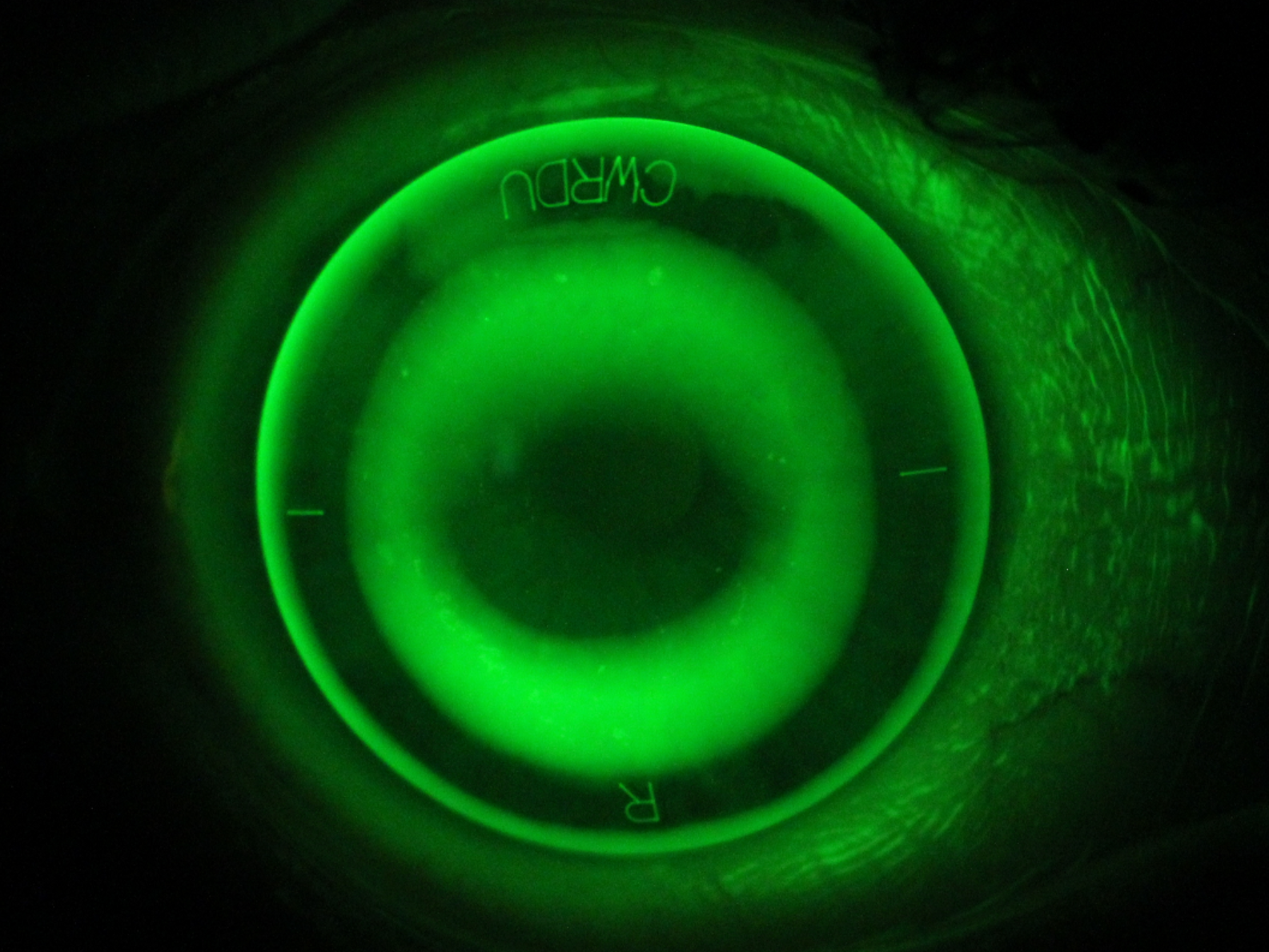
Orthokeratology lens on the eye under green fluorescein light

Orthokeratology, Ortho-K or Night Lenses

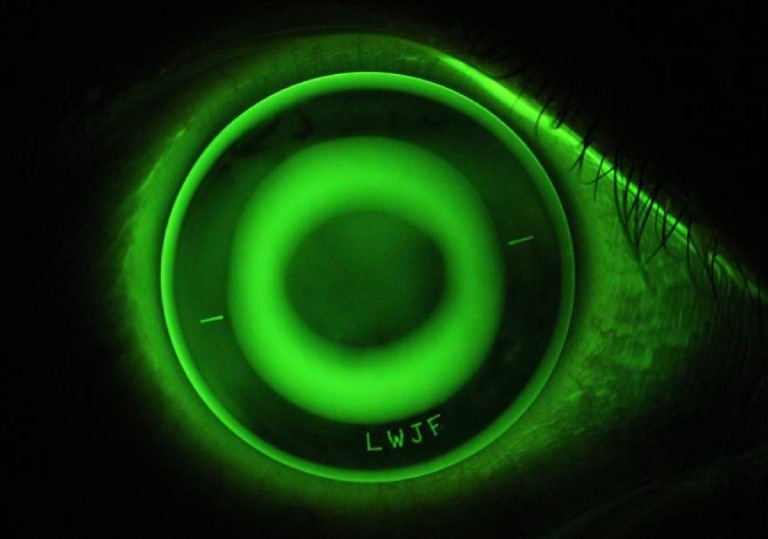
Orthokeratology uses custom rigid contact lenses worn during sleep. The lenses gently reshape the front surface of the eye overnight, giving clear vision during the day without daytime glasses or contact lenses.

Ortho-K can also help slow myopia progression in suitable children.5,6

Ortho-K may suit children who:

  • Play sport
  • Prefer not to wear glasses during the day
  • Prefer Want freedom from daytime contact lenses
  • Have a suitable prescription and eye shape
  • Can follow lens cleaning and hygiene instructions
  • Can attend regular review appointments

Because Ortho-K involves overnight contact lens wear, careful fitting, cleaning and follow-up are essential.
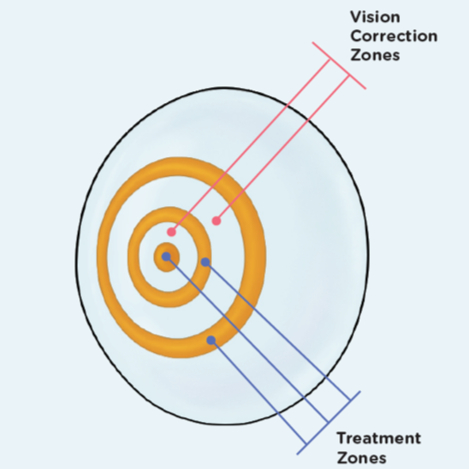
Diagram of a myopia-control soft contact lens showing vision-correction zones and surrounding treatment zones

Soft Myopia Control Contact Lenses

Soft myopia control contact lenses are worn during the day. They can give clear vision while also helping slow myopia progression.7,8

Some children prefer this option because the lenses are comfortable, convenient and useful for sport. Daily disposable designs can also simplify cleaning and reduce handling steps.

Soft myopia control contact lenses may suit children who:
  • Want daytime contact lenses
  • Play sport or dance
  • Are motivated to learn lens handling
  • Have a suitable prescription
  • Can manage lens wear safely
Hand holding a bottle of atropine 0.05% eye drops used for childhood myopia control

Low-Dose Atropine Eye Drops

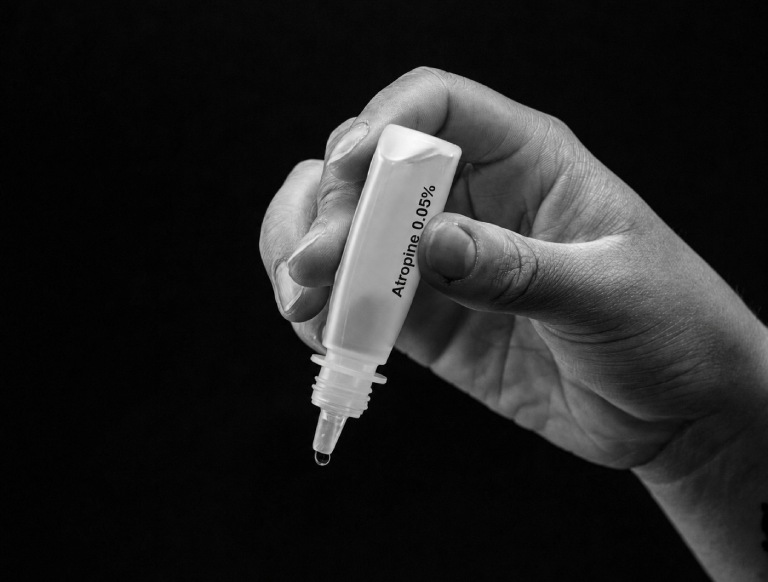
Atropine eye drops can help slow myopia progression in some children.

Low-dose atropine is usually used to reduce the risk of side effects such as light sensitivity and near blur. Research has shown that low concentrations can slow myopia progression, with stronger effects seen at some higher low-dose concentrations.9

Atropine may be considered when:

  • Myopia is progressing quickly
  • Contact lenses are not suitable
  • A child is too young for other options
  • An optical treatment alone is not enough
  • A combined treatment plan is needed

‍

Some children still need glasses or contact lenses while using atropine.

Combination Treatment

Some children continue to progress despite treatment. In these cases, we may consider combining treatments.

For example, a child may use atropine with a myopia control spectacle lens, soft contact lens, or Ortho-K lens.

Combination treatment is not needed for every child. It depends on the rate of progression, axial length growth, age, risk level and how well the current treatment is working.

Which Myopia Control Option is Best?

The best treatment is the one that suits your child and is used correctly.

For some children, myopia control glasses are the most practical starting point. For others, Ortho-K or soft contact lenses may give better lifestyle benefits. Some children may need atropine, either alone or with another treatment.

During your child’s assessment, we explain each option clearly. We discuss expected benefits, limitations, safety, handling, review needs and costs.

When Should My Child Start Myopia Control?

Your child should have a myopia assessment as soon as short-sightedness is detected.

This is especially important if:

  • They are young
  • Their prescription is changing
  • One or both parents are myopic
  • They spend limited time outdoors
  • They do long periods of near work
  • Their axial length is increasing
  • Their myopia is already moderate or high

Starting earlier gives us the best chance to reduce progression before myopia becomes higher.
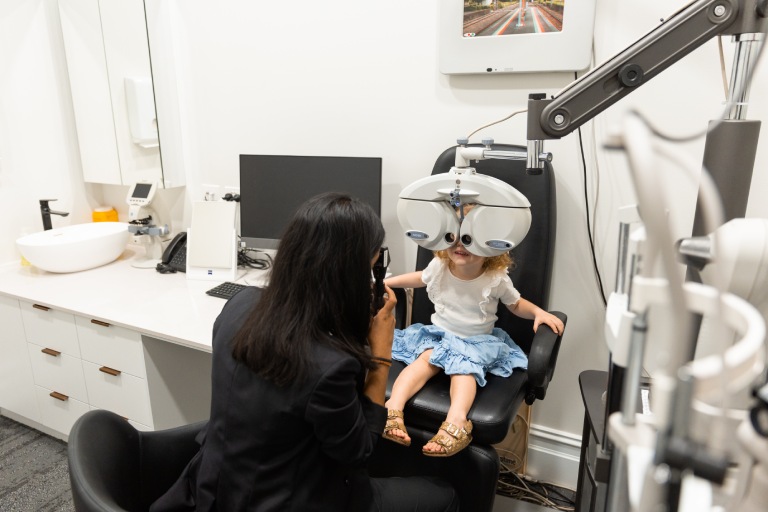
Optometrist checking a young child’s prescription during a myopia assessment at Innovative Eye Care

How Often Are Reviews Needed?

Review timing depends on your child’s treatment and risk level.

‍

Many children need review every 3 to 6 months. Some need earlier review after starting contact lenses, Ortho-K or atropine.

‍

At review appointments, we may check:

‍

  • Vision
  • Prescription
  • Axial length
  • Eye health
  • Lens fit, if contact lenses or Ortho-K are used
    • Comfort
    • Cleaning and handling
  • Treatment response
  • Whether the plan needs to change

Myopia Management for Teenagers and Young Adults

Myopia often starts in childhood, but it can keep changing during the teenage years and sometimes into early adulthood.

Teenagers and young adults may still benefit from monitoring and treatment if their prescription or axial length is changing.

Management may include myopia control contact lenses, Ortho-K, spectacle lens options, atropine in selected cases, lifestyle advice and regular reviews.
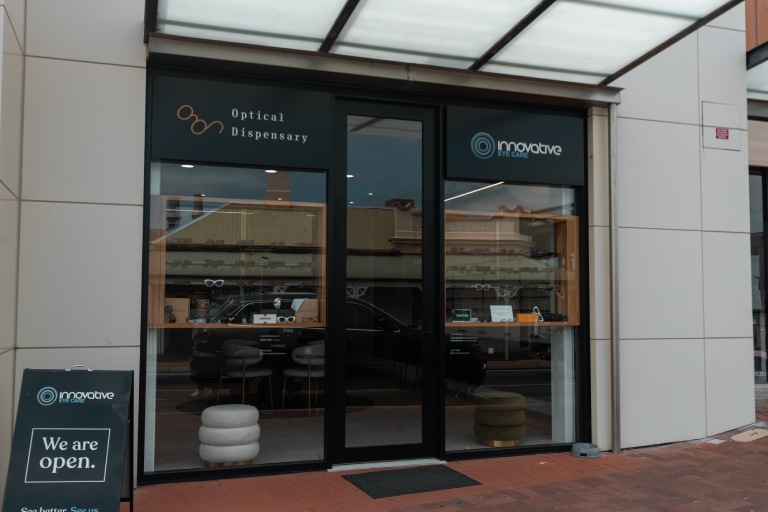
Innovative Eye Care and The Optical Dispensary clinic entrance at Henley Beach

Myopia Management at Innovative Eye Care

Innovative Eye Care provides personalised myopia prevention, control and management in Adelaide and Henley Beach.

Our approach includes:

  • Detailed children’s eye examinations
  • Axial length monitoring
  • Corneal topography and advanced imaging
  • Evidence-based myopia control spectacle lenses
  • Ortho-K and specialty contact lens fitting
  • Soft myopia control contact lenses
  • Atropine management when appropriate
  • Clear education for parents and children
  • Ongoing review and treatment adjustment

‍

We focus on your child’s vision now and their long-term eye health.

Frequently Asked Questions

Is myopia the same as short-sightedness?
Yes. Myopia and short-sightedness mean the same thing. People with myopia usually see near objects clearly but have blurred distance vision.
Can myopia be reversed?
True myopia usually occurs when the eye grows too long. Glasses, contact lenses and Ortho-K can correct vision, but they do not permanently shorten the eye. Myopia control aims to slow progression.
Does screen time cause myopia?
Screen time is not the only cause. Myopia risk comes from a mix of genetics and environment. Long periods of close work and reduced outdoor time can both contribute to risk.
How much outdoor time helps prevent myopia?
Research supports regular outdoor time as a useful way to reduce the risk of myopia developing.3,4 A practical goal is regular daily outdoor time, balanced with sun protection.
Do normal glasses slow myopia progression?
Standard single vision glasses correct blurred distance vision. They are not designed to slow eye growth. Myopia control lenses use special optical designs to help slow progression.
Are myopia control contact lenses safe for children?
Contact lenses can be safe for children when they are fitted properly, handled correctly and reviewed regularly. Hygiene, maturity and family support are important.
Is Ortho-K safe?
Ortho-K can be safe and effective for suitable children, but it needs careful fitting, cleaning and follow-up because the lenses are worn overnight.
Does atropine cure myopia?
No. Atropine does not cure myopia. It may help slow progression in suitable children.
Can my child stop treatment once myopia slows?
Sometimes, but stopping too early may allow progression to resume. We guide this decision based on age, prescription stability, axial length and risk level.

References

  1. Holden BA, Fricke TR, Wilson DA, et al. Global Prevalence of Myopia and High Myopia and Temporal Trends from 2000 through 2050. Ophthalmology. 2016;123(5):1036-1042. doi:10.1016/j.ophtha.2016.01.006
  2. Haarman AEG, Enthoven CA, Tideman JWL, Tedja MS, Verhoeven VJM, Klaver CCW. The Complications of Myopia: A Review and Meta-Analysis. Invest Ophthalmol Vis Sci. 2020;61(4):49. doi:10.1167/iovs.61.4.49
  3. He M, Xiang F, Zeng Y, et al. Effect of Time Spent Outdoors at School on the Development of Myopia Among Children in China: A Randomized Clinical Trial. JAMA. 2015;314(11):1142-1148.
  4. Wu PC, Chen CT, Lin KK, et al. Myopia Prevention and Outdoor Light Intensity in a School-Based Cluster Randomized Trial. Ophthalmology. 2018;125(8):1239-1250. doi:10.1016/j.ophtha.2017.12.011
  5. Cho P, Cheung SW, Edwards M. The Longitudinal Orthokeratology Research in Children (LORIC) in Hong Kong: A Pilot Study on Refractive Changes and Myopic Control. Current Eye Research. 2012;30(1):71-80.
  6. Sun Y, Xu F, Zhang T, et al. Orthokeratology to control myopia progression: a meta-analysis. PloS one. 2015;10(4):e0124535.
  7. Chamberlain P, Bradley A, Arumugam B, et al. Long-term Effect of Dual-focus Contact Lenses on Myopia Progression in Children: A 6-year Multicenter Clinical Trial. Optometry and Vision Science. 2022;99(3):204. doi:10.1097/OPX.0000000000001873
  8. Walline JJ, Walker MK, Mutti DO, et al. Effect of High Add Power, Medium Add Power, or Single-Vision Contact Lenses on Myopia Progression in Children: The BLINK Randomized Clinical Trial. JAMA. 2020;324(6):571. doi:10.1001/jama.2020.10834
  9. Yam JC, Jiang Y, Tang SM, et al. Low-Concentration Atropine for Myopia Progression (LAMP) Study: A Randomized, Double-Blinded, Placebo-Controlled Trial of 0.05%, 0.025%, and 0.01% Atropine Eye Drops in Myopia Control. Ophthalmology. 2019;126(1):113-124.

Speak to our friendly team today

Book your appointment now for personalised eye care tailored just for you.