

Book Online
Please choose which location you would like to make an appointment for.
A lazy eye is the common name for amblyopia. It happens when one eye does not develop clear vision as well as the other eye, even when the eye looks healthy.
A lazy eye usually starts in childhood. It can be easy to miss because children often rely on their stronger eye and may not complain about blurred vision.
At Innovative Eye Care, we assess a lazy eye in children and adults at our Adelaide and Henley Beach practices. We check vision, eye focus, eye alignment, eye teaming and eye health to find out why one eye may not be seeing as clearly as expected.
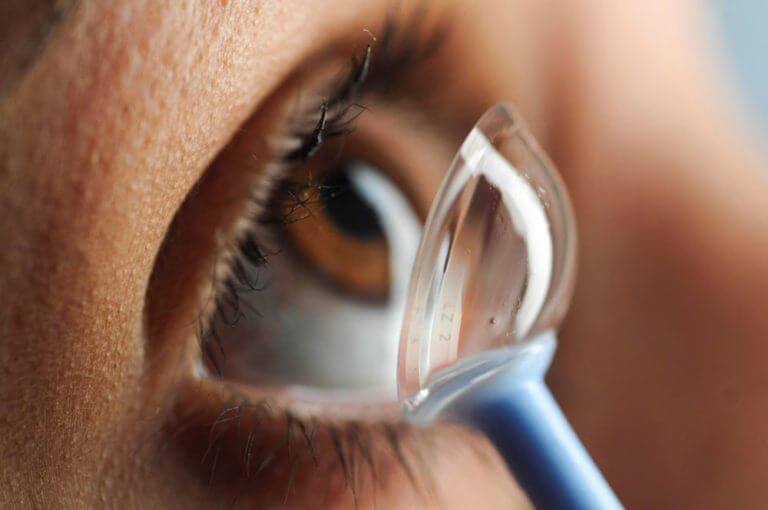
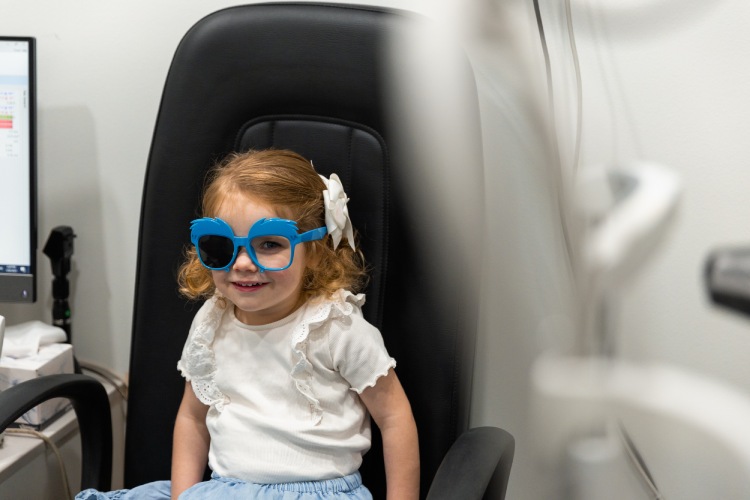
A lazy eye, or amblyopia, occurs when the brain favours one eye and does not use the other eye properly for clear vision. Over time, the weaker eye can fall behind in visual development.
A lazy eye can affect reading comfort, depth perception, hand-eye coordination, sport, learning and everyday confidence. It does not always cause obvious symptoms, so a child can pass through the early years without anyone noticing.
A lazy eye can affect young children, even when their eyes look normal. Australian research suggests it affects about 1 in 50 preschool children and is often linked with prescription problems or an eye turn.1,2
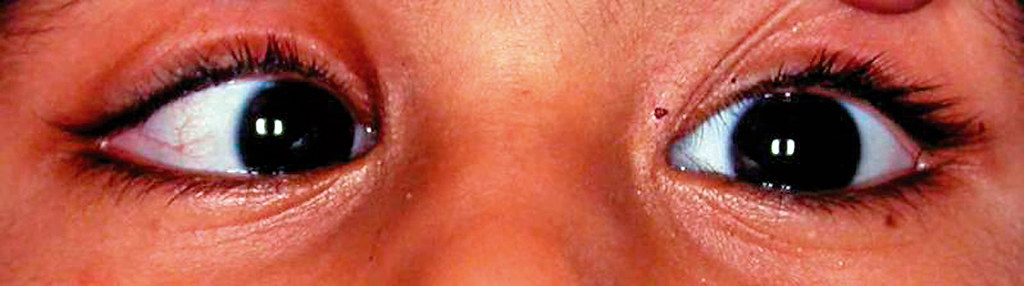
A lazy eye usually develops when the brain receives a clearer image from one eye than the other during childhood.
Common causes include:
This is called anisometropia. One eye may be more long-sighted, short-sighted or astigmatic than the other. The child may still seem to see well because the stronger eye compensates.
This is called strabismus. One eye may turn in, out, up or down. The brain may ignore the turned eye to avoid double vision.
Significant long-sightedness, short-sightedness or astigmatism in both eyes can blur the image reaching the brain during visual development.
Less common causes include cataract, droopy eyelid, corneal opacity, or another condition that blocks clear vision in one eye. These cases need early detection and management.

A lazy eye can be hard to spot at home. Many children do not know one eye is blurry because they assume their vision is normal.
Signs can include:
Some children have no obvious signs. This is why children’s eye tests are important, even when vision seems normal.
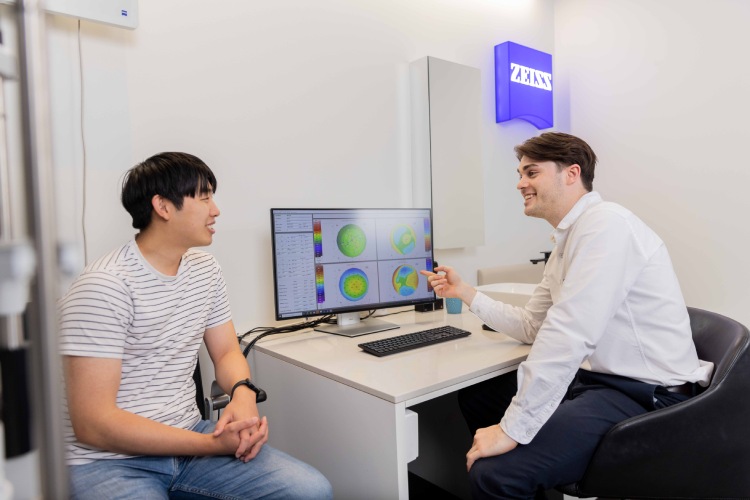
Yes. Adults can have a lazy eye if amblyopia developed in childhood and was not fully treated.
Treatment is usually more effective when started early, but older children and some adults may still benefit from assessment. Clinical trials have shown that some children aged 7 to 17 can improve with treatment, although response is usually stronger in younger children.3
An adult lazy eye assessment can help confirm the diagnosis, check eye health, update glasses or contact lenses, and discuss whether vision training or other options may be suitable.
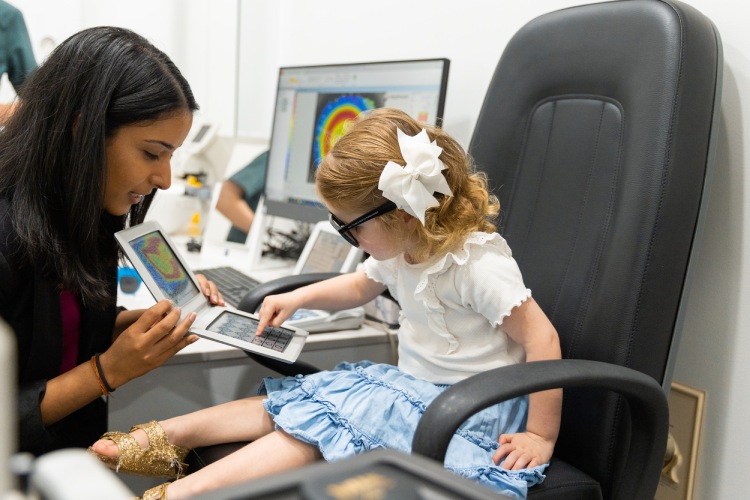
A lazy eye assessment looks at more than how well each eye reads the letter chart.
At Innovative Eye Care, testing may include:
We also look at how your child uses their eyes for school, reading, screens, sport and daily tasks.
Treatment depends on the cause, the child’s age, the level of vision difference and how the eyes work together.

Glasses are often the first step. If one or both eyes are blurred due to prescription, clear and consistent vision correction gives the brain a better image to use.
Clinical research has shown that optical correction alone can improve vision in many children with amblyopia, which is why glasses are often started before patching or drops are considered.4
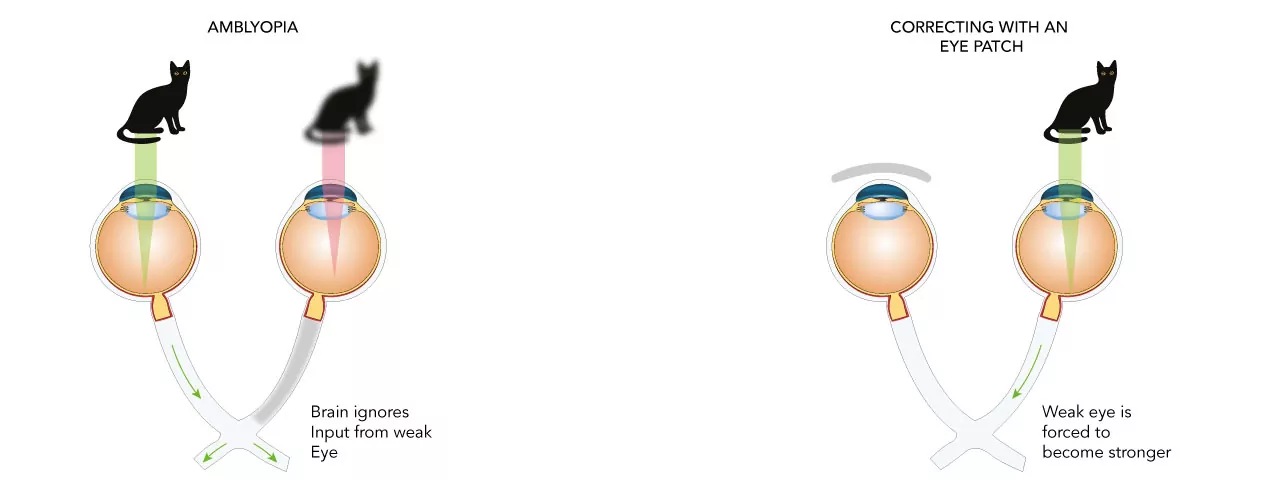
Patching covers the stronger eye so the brain has to use the weaker eye. This can help improve vision in the amblyopic eye.
The amount of patching varies. It depends on the child’s vision, age and response to treatment. Some children only need a small amount each day, while others need a more structured plan.

Atropine drops can blur the stronger eye for near tasks, encouraging use of the weaker eye. A large randomised clinical trial found that both patching and atropine improved moderate amblyopia in children under 7 years old.5

Some children need help with how the eyes work together, especially when a lazy eye is linked with eye teaming, suppression, reduced depth perception, or an eye turn.
Vision therapy does not replace glasses, patching, or medical care when those are needed. It may form part of a broader treatment plan.
At Innovative Eye Care, we may discuss in-practice activities, home-based activities, or digital vision therapy options such as Vivid Vision Virtual Reality Training or AmblyoPlay when suitable.
Lazy eye treatment needs regular review. Vision can improve, plateau, or sometimes regress after treatment stops. Research has found that about one quarter of successfully treated children can have recurrence within the first year after stopping treatment, so follow-up is important.6
No. A lazy eye and an eye turn are different, but they can happen together.
A lazy eye means one eye has reduced visual development.
An eye turn means one eye is not aligned with the other eye.
A child can have a lazy eye without an obvious eye turn. A child can also have an eye turn without a significant lazy eye. A full eye test helps separate these issues and guide the right treatment.
Eye Turn page
Children should have an eye test if there are any concerns about vision, eye alignment, reading, learning, headaches, clumsiness, or family history.
A child should also be tested before starting school, even if no symptoms are obvious. Early detection gives the best chance of improving vision while the visual system is still developing.
You can also read more on our Children’s Vision page:
Not every case can be prevented, but early detection can reduce the chance of long-term vision loss.The key steps are:
Innovative Eye Care provides detailed children’s vision assessments in Adelaide and Henley Beach.
We take the time to explain what is happening, why one eye may be weaker, and what treatment options are realistic for your child.
Your assessment may include advanced testing of:
We also consider related areas such as children’s vision, myopia, vision and learning, and digital vision therapy when relevant.
If you are concerned about a lazy eye, an eye turn, poor depth perception, or one eye not seeing clearly, book an assessment with Innovative Eye Care.
We provide children’s eye tests and amblyopia assessments at our Adelaide and Henley Beach practices.
Book your appointment now for personalised eye care tailored just for you.