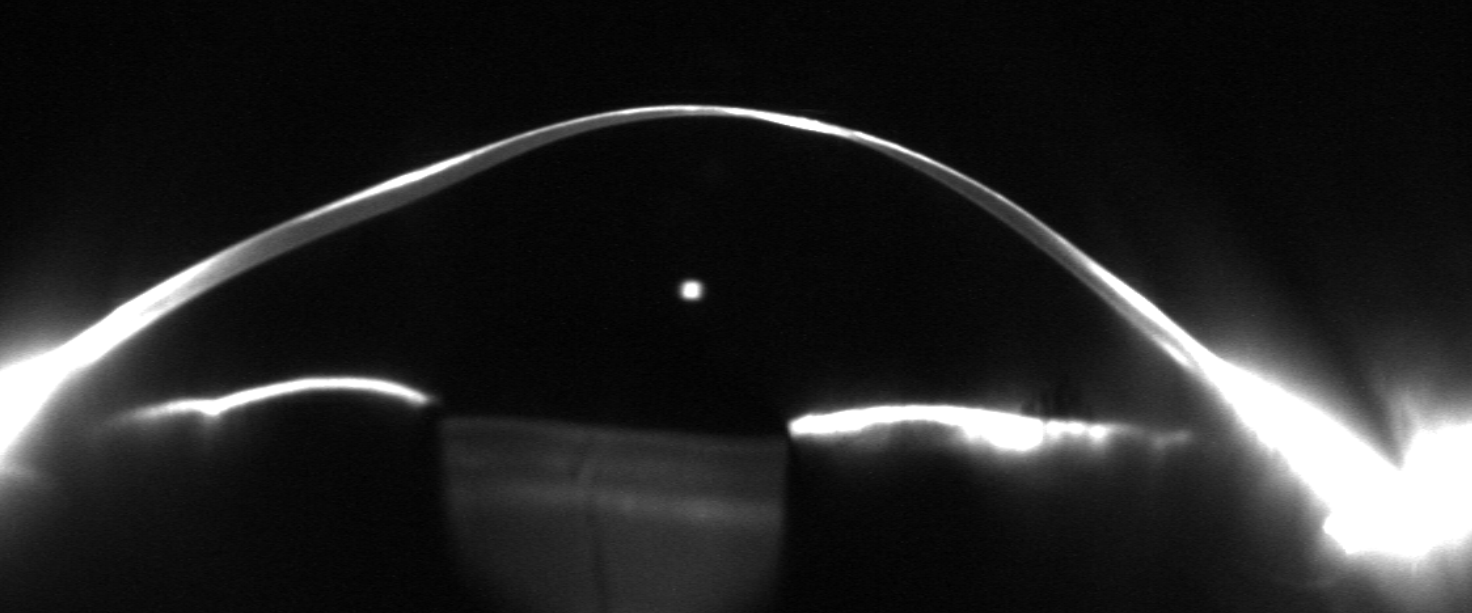
This case report highlights the importance of regular monitoring of eyes with keratoconus at all ages, the effectiveness of scleral lenses in correcting vision, and the negative effects of eye rubbing.
Keratoconus is a bilateral corneal condition characterised by progressive steepening and thinning of the cornea. This irregularity can cause blurred and distorted vision that cannot always be fully corrected with spectacles.
Keratoconus typically develops during adolescence and early adulthood, with progression generally becoming less common with age. However, as this case demonstrates, progression can still occur well in our 50s.
Mr DM, a 52-year-old male, presented to Innovative Eye Care in 2022 as a new patient with known bilateral keratoconus, significantly worse in his right eye. Mr DM had never worn glasses or contact lenses and had adapted to rely predominantly on his left eye, which provided adequate functional vision without correction.
Unaided Visual Acuity:
Right eye: 6/75 | N40
Left eye: 6/6 | N5
Prescription & Best Corrected Visual Acuity:
Right eye: -0.25/-0.25×150 | Visual Acuity: 6/5
Left eye: +4.50/-4.25×95 | Visual Acuity: 6/15
Scleral Contact Lenses
Mr DM's right eye was fitted with a scleral rigid gas permeable contact lens. The lens vaults over the irregular keratoconic cornea, creating a smooth and regular optical surface for light to enter the eye. This lens significantly improves vision by reducing the optical effects of corneal irregularity and higher-order aberrations.
The result was remarkable:
Unaided vision: 6/75 → Spectacle Lens Vision: 6/15 → Scleral Lens vision: 6/6
Mr DM was amazed by the improvement and has continued to wear his scleral lens every day.
Four Years Later
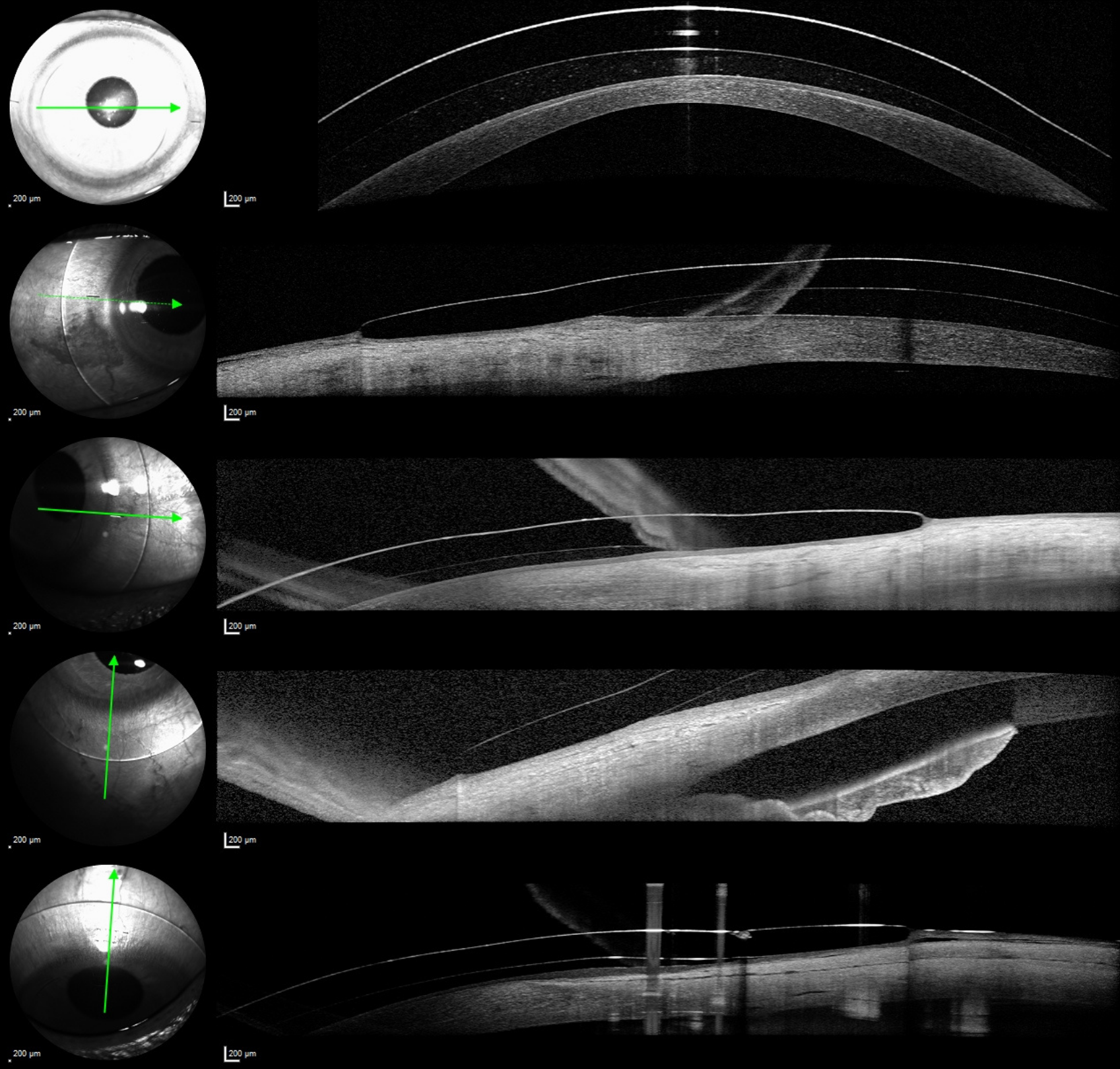
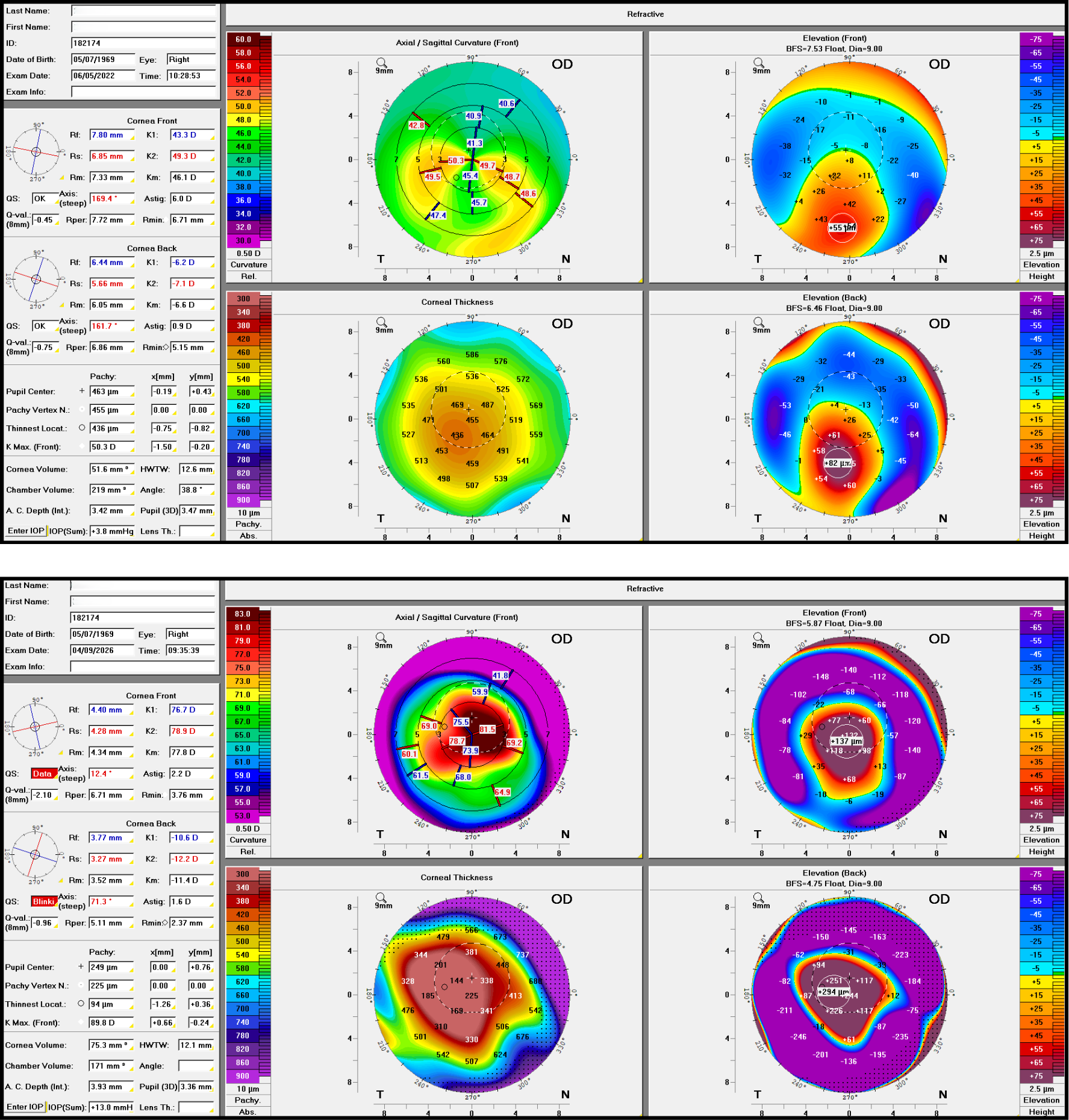
Mr DM was initially reviewed regularly; however, a period went by where he was lost to follow-up. When Mr DM recently returned to the practice, comprehensive corneal imaging with Pentacam corneal tomography demonstrated significant progression of keratoconus in his right eye.
Comparison of his 2026 scans showed significant changes, including increased corneal steepening and thinning, as well as changes in anterior and posterior corneal elevation.
While keratoconus progression becomes less common with increasing age, it does not necessarily stop after age 40. This case highlights why regular monitoring remains important, regardless of a patient's age.
Why is Eye Rubbing Discouraged?
One potential contributing factor to keratoconus progression is eye rubbing.
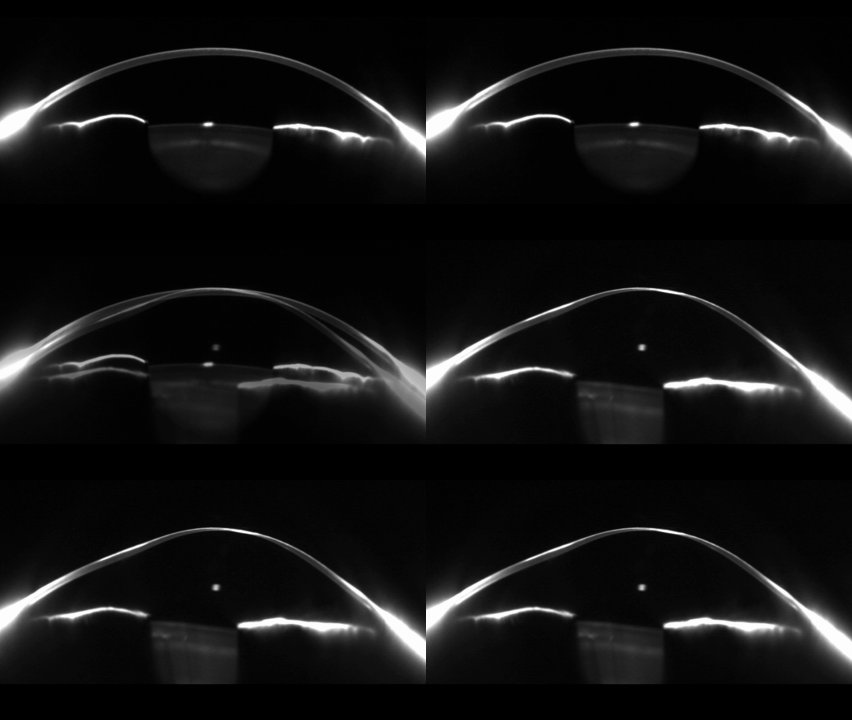
Keratoconic cornea have altered biomechanical properties. They are less rigid and are more susceptible to deformation. Repeated mechanical stress from vigorous eye rubbing may contribute to progression in susceptible individuals.
If your eyes are frequently itchy, particularly during hay fever season, it is important to address the underlying cause rather than simply trying to resist the urge to rub. Managing ocular allergies and being conscious of the habit can help reduce eye rubbing.
Don't Stop Monitoring Your Keratoconus.
Mr DM's case is an important reminder that keratoconus does not always follow the textbook.
Regardless of age, regular six monthly to annual reviews allow your optometrist to monitor changes in corneal shape, structure and biomechanics and detect progression as early as possible.
At Innovative Eye advanced technologies including Pentacam corneal tomography and Corvis ST allow us to assess the shape and biomechanical properties of the cornea. We are here to monitor your corneas and protect your vision.
Book an appointment with Innovative Eye Care today to have your corneal shape and biomechanics assessed.